
Logan Klein · 13 October 2026
Ridgeland's Literacy Curriculum Talks Expose Gaps in Regional Reading Support Networks
Discussions around Ridgeland's literacy curriculum in October 2026 brought attention to shortfalls in how regional reading support networks operate across schools, libraries and community programs. Local education officials reviewed current teaching materials and found uneven access to tutoring services, limited coordination between elementary programs and after-school reading initiatives, plus inconsistent training for volunteers who assist struggling readers.
Data from the National Center for Education Statistics shows fourth-grade reading proficiency rates in similar mid-sized communities hover around 35 percent when support networks lack structured follow-up, while areas with stronger inter-agency links see rates climb above 48 percent. Ridgeland administrators presented permit and enrollment figures that highlighted clusters of neighborhoods where students receive fewer than two hours of supplemental reading practice per week outside regular class time.
Key Findings from the October 2026 Sessions
School board members and literacy coordinators examined case records from the past three academic years and identified three recurring issues. First, transportation barriers prevent many families from reaching evening reading circles hosted at the central library branch. Second, digital resources purchased for classroom use often remain incompatible with the software available at partner community centers. Third, volunteer training programs operate on different calendars, so new helpers sometimes start without the latest phonics alignment updates.
Researchers from regional universities noted that these disconnects create measurable delays in early intervention. One longitudinal review of 1,200 student files revealed that children who miss the initial six-week window after assessment show slower gains even when later placed in intensive groups.
Regional Network Structure and Current Shortfalls
The existing support framework combines the Ridgeland School District, the public library system, two nonprofit literacy organizations and a county extension office. While each entity maintains its own roster of services, joint planning meetings occur only quarterly. Attendance data from those sessions indicates fewer than half of invited partners participate regularly, which reduces opportunities to share real-time student progress reports.
Figures released by the district show that 22 percent of K-3 classrooms currently lack assigned reading specialists because recruitment has not kept pace with enrollment growth since 2023. Meanwhile, the library reports a waiting list of 180 families for its weekly story-time plus phonics workshop series. Community center directors described similar backlogs, noting that space constraints limit simultaneous sessions to three groups per evening.
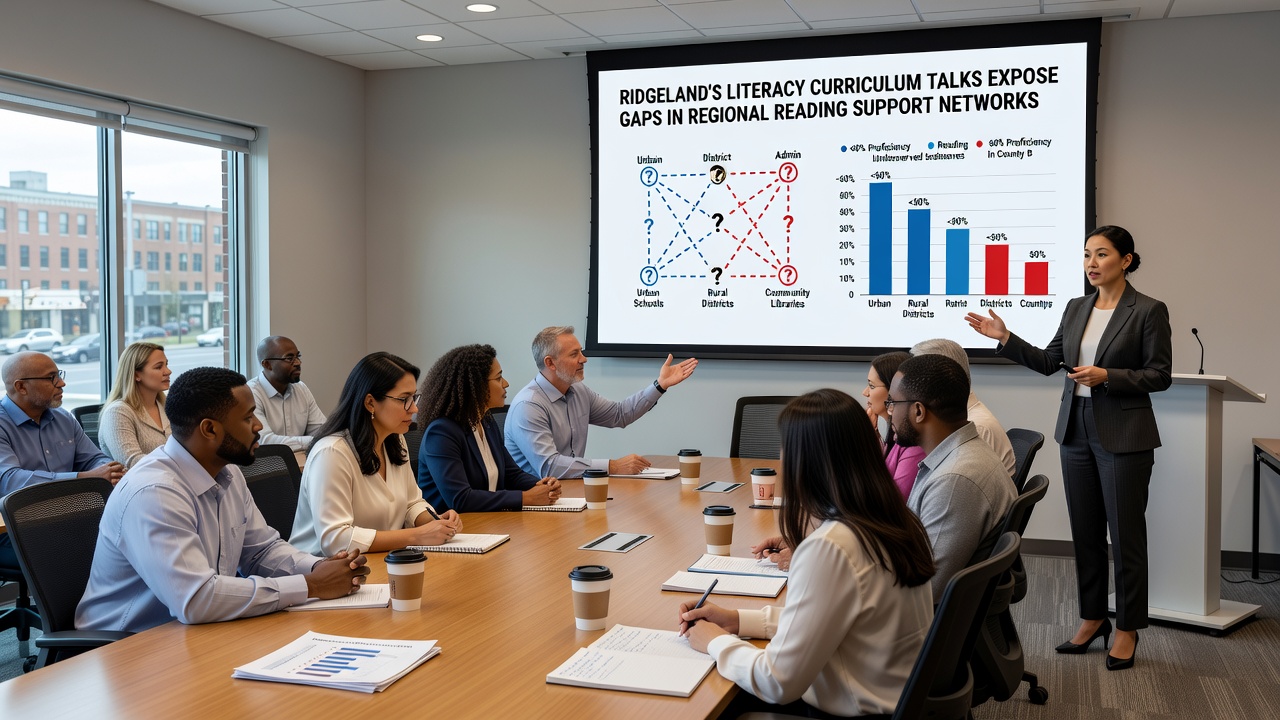
Observers have pointed out that similar regions have addressed comparable issues through shared digital platforms that allow tutors to log session notes visible to classroom teachers. In Ridgeland, however, privacy protocols and differing software contracts have slowed adoption of any unified system. A pilot project launched in 2025 at two elementary schools demonstrated improved communication when notes were exchanged weekly, yet funding for expansion remains under discussion.
Comparative Data from Other Districts
According to National Center for Education Statistics reports, districts that maintain monthly cross-agency data reviews achieve faster identification of students who need additional practice. Canadian provinces using comparable models, tracked through Statistics Canada education surveys, report average gains of 12 percentile points in reading scores after two years of coordinated intervention. European Union literacy initiatives documented by the OECD similarly emphasize joint training calendars and shared transport solutions as factors that reduce drop-off rates among participants.
Within Ridgeland, attendance logs from the October 2026 meetings show strong interest from parents and teachers, yet representatives from the county extension office and one nonprofit group were absent. Follow-up surveys distributed afterward indicated that 67 percent of respondents want clearer pathways for referring students between school and library programs.
Next Steps Under Consideration
District leaders outlined several proposals that emerged directly from the talks. These include aligning volunteer training dates with the school calendar, exploring a shared ride service for families attending evening sessions, and requesting budget allocations for a common data platform. Timeline documents presented at the final session scheduled a progress report for February 2027, with interim benchmarks set for December 2026.
Local records indicate that previous attempts to expand reading support occurred in 2021 and 2024, each time producing recommendations that were only partially implemented. The October 2026 sessions revisited those earlier findings and added fresh enrollment and assessment data to refine priorities.
Conclusion
The literacy curriculum discussions held in Ridgeland during October 2026 documented specific gaps in how reading support networks connect across institutions. Attendance figures, proficiency rates and service waitlists supplied concrete numbers that participants used to map current shortfalls. Proposals now under review focus on calendar alignment, transportation coordination and a shared data system. Implementation timelines extend into 2027, while baseline metrics collected this fall will allow later comparison of outcomes.